New to the Fight? What to Expect.
Report-Back From San Marcos, Texas
San Marcos lies in a zone of natural springs stretching from Austin southward, and west past San Antonio. These are ancient headwaters that flow all the way to the Gulf. At the river’s source, people have gathered for thousands of years.
Today, the city’s river parks—full of turtles, wild rice, and the rare otter—are beloved by residents, who hold a deep reverence for this land and water. Amid the rapidly urbanizing San Antonio-Austin corridor, the surrounding rural land remains home to multi-generational farms and ranches. This is a special place—and like so many other places in this country, threatened by a surge of proposed AI data centers.
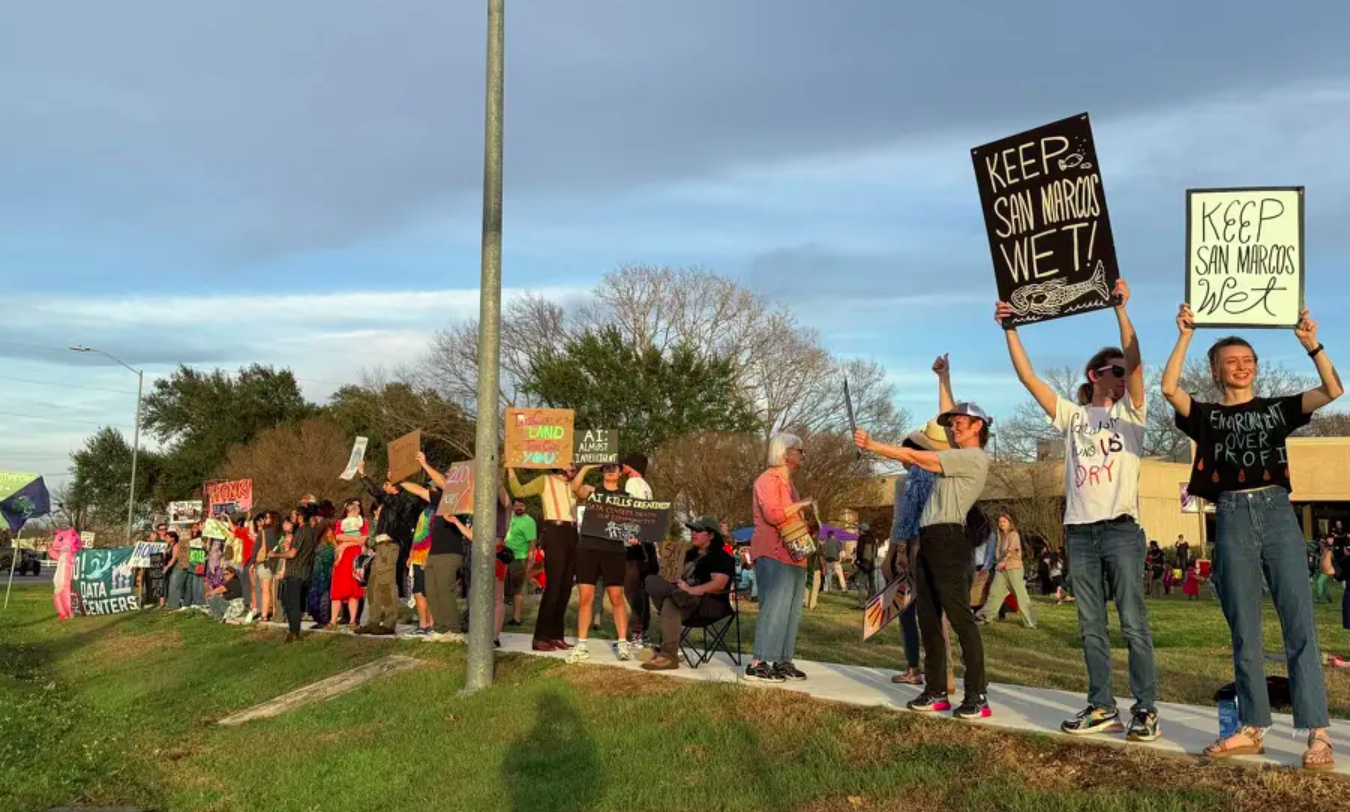
The fight began when neighbors of a proposed site noticed a fallen-down notice for a new development, on what was still a large working farm and ranch. They discovered it was set to be a hyperscale AI data center, alerted their neighbors, and organized a protest. On the road, in front of cattle grazing by the creek, they stopped cars as they drove by, and told them about the developers' plans.
A few people from town heard about the protest, and went out to meet the neighbors, forming connections which eventually grew into a powerful local movement. A year and a half later, we have defeated two data centers, and are on track to defeat two more. We've developed and spread organizing strategies, set legal precedent, and built working relationships across the region, with the goal of contributing to a mass movement against AI and data center development. We wrote this to share some of what we've learned, to support others organizing in their own communities.
What to Expect
By the time you find out about a project, the developer or their spokespeople will have talking points about the project. If they want something from local authorities, like zoning approval or tax abatements, they'll have already spoken to decision-makers before you ever learn about the project. And because data centers don't provide significant local benefits, developers have to rely on lies to sell these projects.
When we started a year and a half ago, the community and government officials were vulnerable to those lies. People knew very little about the effects of the proposed data centers, or what the data centers even were. Education continutes to be a major focus for us.
Developers and industry-aligned officials often think that they are smarter than people in the community. Education gives people the confidence to stand up to this disempowering condescension, and to be brave enough to apply real pressure. To help build that confidence, we’re always writing new educational materials, or adapting existing ones, and sharing them in new places and new ways—so that we can reach as many different people as possible.
We’ve never experienced a social movement that is so widespread, across so many kinds of people. We think this is where power is—not in the decisions of government officials, or specific moments of success or failure—but rather the practice of so many people gathering and working together.
Strategic Research
Our focus right now is organizing to slow or stop specific proposed projects in our region. Getting good information about these projects has been a challenge.
If you’re getting started, it might be really hard to find out who is even behind a project. A lot of facts might be hidden behind Non-Disclosure Agreements (NDAs), or private meetings with government staff and officials, and the truth is that developers themselves might not even know the basics. They might be land brokers, setting up land to sell to a developer, who will sell to an operator, who will rent computer capacity to another company. Any of these people might speak as if they have it all figured out, but often we've found they're either lying or constantly changing plans.
We’ve seen two types of characters serving as spokespeople for a project. There are the long-time data center industry professionals, who might be surprisingly sheepish and unprepared for widespread pushback. Then there are development-savvy speculators, who know almost nothing about data centers and are trying out a new venture—or just flipping the land for someone else to build on. Either way, it's important to note when they're skipping over critical information, and where we can make those gaps clear. For example, after months of public meetings, public pressure forced one developer to admit he wanted to use over five times the power of the entire city.
We learn new information in a variety of ways. We've learned a surprising amount of intel through the grapevine, just from talking to people. Some people in our organizing group have lived in the area their whole lives, and get told all sorts of things that aren’t public knowledge.
We also use public records requests, various online information and other sleuthing to discover basic facts and track developers’ plans. We try to stay on top of the status of permits, water sourcing, expiration dates of land purchase contracts, and other strategically relevant details.
Through public records requests, we continually find juicy communication that contradicts public narratives, or reveals scandalous and illegal behavior. Public records requests also reveal basic information, like the size of a project, its exact location, and the individuals and contractors involved.
We also have to understand the context of developers' plans—things like county laws, water rights, or electric grid interconnection and power transmission. We either find trustworthy experts or become those experts ourselves, always sharing with others, in plain language, what we learn.
Pressure Campaigns
All of this research helps us determine strategic targets for pressure campaigns. It helps the community feel oriented, not overwhelmed, and ready to fight.
Fight who? With limited time and energy, and the quick pace of these developments, it's important to focus on practical strategic approaches. The most direct way to stop a project is through permits and zoning, but most data centers in Texas are in county areas with no restrictive permit or zoning authority, and relevant state agencies are no help. Many peoples' instinct is to petition or write letters to state representatives begging for support, and hope that state laws and regulations will emerge in time to stop projects. We’ve found that a more promising path is working to pressure local targets, who both live here and have direct, immediate power to interfere with development.
We're interested in choosing targets that can either stop or slow development. We say that 'slowing is stopping'—whether or not the AI bubble pops suddenly, we expect data center investment will stall as investors acknowledge that overhyped AI products are not giving them the promised return on investment. We don't have to fight a project forever, only until investors decide that the additional costs from the slowed pace aren't worth it.
Whether our goal is slowing or stopping, when we choose which target to pressure, we ask three questions.
1. First, we determine if they can interfere with a specific project. A good target needs to have access to some specific power or process that will slow or stop a development.
2. Second, we ask if they would slow or stop development: how invested are they in the project? A developer could choose to stop pursuing a project, or a general contractor could walk away, but there are investments, profits, and contracts that make that unlikely in most cases.
3. Third, we ask how much influence we have on the target. A distant politician or an out-of-state developer is insulated in ways a local official is not. Especially in small towns, it can be empowering to think about the social world that people are accountable to.
All sorts of people have power over the pace and success of a data center project, and pressure can look different ways. Sometimes it looks like focused, private conversations. Multiple landowners, with gentle, private encouragement, have refused to sell key tracts, and some have been persuaded to let their active contracts with data center developers expire.
Right now, we're mostly focused on pressuring small volunteer water boards to deny data center connections. Often the most effective pressure here is supportive collaboration and polite mass presence—especially because we’ve already worked for months to get sympathetic people elected to the board. But it’s important to remain creative when we imagine what it will take to win.
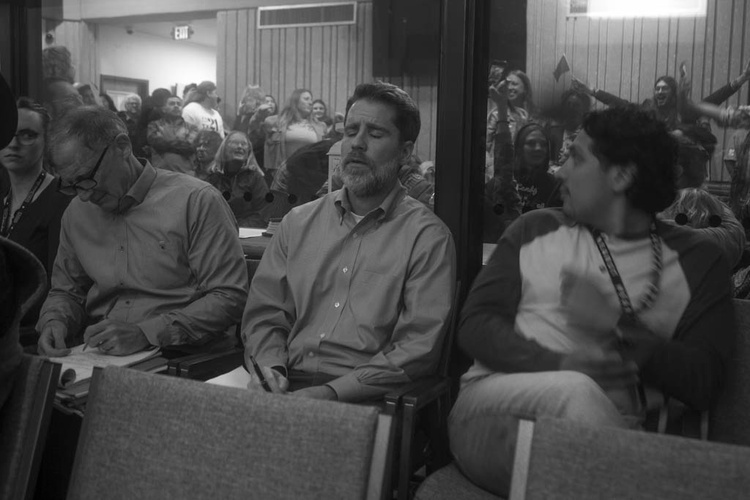
One data center proposal here was canceled after a year of pressuring a city council, and near the end, the meetings were getting out of control. People were being thrown out for being disruptive, and the lobby was packed shoulder to shoulder with a cheering crowd. In case the vote failed, we were making plans for how we could, with as many people as possible, shut the whole meeting down.
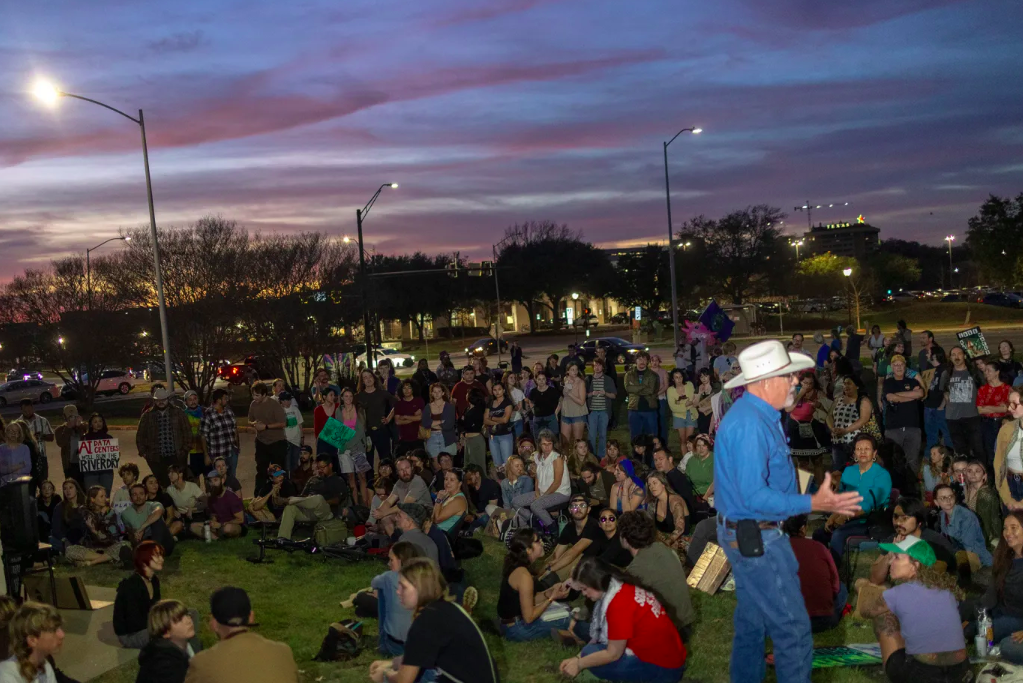
Even the most boring activities can be made new. A homeschooling collective here brings pop up tents, and homemade drinks and snacks, to all the major government meetings. At the largest meetings, we’ve had cookouts, dance parties, and a sort of music festival atmosphere. Government meetings almost seem designed to drain our energy. We strive to make sure every activity gives us more energy, and brings in more people.
Energy is always limited, and focus is important. Whatever we do, we ask ourselves:
1. Is this the best use of our energy right now, to move us toward our goal?
2. Will this realistically influence the targets we've chosen toward the action we want them to take?
3. And are there ways to shift the tone of an activity, or our narrative around it, to more effectively bring people together?
Many allies are not who we initially expected. Supposedly helpful non-profits might talk the talk, but collaborate with industry to plan 'sustainable' data centers and introduce 'harm reduction' regulations. Politicians stepping in as saviors are often just fishing for votes, making big promises they don't intend to keep, or passing resolutions that look good until you read the fine print.
On the other hand, we've found surprising allies in people who aren't necessarily political, or who are political in ways that would ordinarily pit us against them. The data center movement cuts across subcultures and political ideologies. And this makes mass pressure possible in ways it normally isn't.
Coming together isn’t easy. Having efficient, effective meetings, especially in larger groups, is still a work in progress. Another issue with large groups is the potential for infighting. We try to keep our 'arrows pointed at the target,' aiming our hostility at data center developers, not each other. And always, getting along is easier if we are comfortable splitting up as needed to take different approaches, while still supporting each other and communicating toward a shared strategy.
All sorts of people have power over the pace and success of a data center project, and pressure can look different ways. Sometimes it looks like focused, private conversations. Multiple landowners, with gentle, private encouragement, have refused to sell key tracts, and some have been persuaded to let their active contracts with data center developers expire.
Right now, we're mostly focused on pressuring small volunteer water boards to deny data center connections. Often the most effective pressure here is supportive collaboration and polite mass presence—especially because we’ve already worked for months to get sympathetic people elected to the board. But it’s important to remain creative when we imagine what it will take to win.
One data center proposal here was canceled after a year of pressuring a city council, and near the end, the meetings were getting out of control. People were being thrown out for being disruptive, and the lobby was packed shoulder to shoulder with a cheering crowd. In case the vote failed, we were making plans for how we could, with as many people as possible, shut the whole meeting down.
Energy is always limited, and focus is important. Whatever we do, we ask ourselves:
1. Is this the best use of our energy right now, to move us toward our goal?
2. Will this realistically influence the targets we've chosen toward the action we want them to take?
3. And are there ways to shift the tone of an activity, or our narrative around it, to more effectively bring people together?
Many allies are not who we initially expected. Supposedly helpful non-profits might talk the talk, but collaborate with industry to plan 'sustainable' data centers and introduce 'harm reduction' regulations. Politicians stepping in as saviors are often just fishing for votes, making big promises they don't intend to keep, or passing resolutions that look good until you read the fine print.
On the other hand, we've found surprising allies in people who aren't necessarily political, or who are political in ways that would ordinarily pit us against them. The data center movement cuts across subcultures and political ideologies. And this makes mass pressure possible in ways it normally isn't.
Coming together isn’t easy. Having efficient, effective meetings, especially in larger groups, is still a work in progress. Another issue with large groups is the potential for infighting. We try to keep our 'arrows pointed at the target,' aiming our hostility at data center developers, not each other. And always, getting along is easier if we are comfortable splitting up as needed to take different approaches, while still supporting each other and communicating toward a shared strategy.
Why We Think We’re Winning
These projects are more fragile than they pretend to be. There are a lot of pieces that need to come together for them to succeed. For each site fight, we stay focused on the most likely failure point, but develop backup plans as well, just in case. We are ready to adapt as we receive new information.
When we started, most people saw these projects as inevitable, but our successes and information campaign have led to a shift in that mentality. People in the community have been changed, and together we're starting to learn what it feels like to be part of a collective force. It can be a rare experience in our culture.
Over time, people have learned more about the harms of data centers, and are more willing to take a stand against them. People are more willing to stretch their comfort limits, and be brave. For many, even standing up and speaking can be frightening. Joining a meeting and trying to contribute can be frightening. Some of our movement spokespeople never would have expected to do the kind of public speaking they now do regularly. All of us, in different ways, have grown.
One of the main reasons we're winning, on a deeper level, is because our enemies haven't succeeded in pitting some parts of the movement against others. In the midst of the culture wars, this is remarkable. No matter what happens now, we're building a collective community force. And the relationships and skills we're building will be useful for whatever comes next.
What’s Next?
Huge data center projects are proposed across our region, often in communities who are just now beginning to organize against them. We're working to share our practices to help new groups get started. This means taking ourselves seriously as people who have something to teach.
It's hard to be confident about how to approach things, because the situation is constantly changing. One major change is the sudden swell of Texas state politicians speaking in support to the movement. We don't trust them, and we're worried that people will take politicians’ words in good faith, drawing energy away from local organizing with promises of state or federal legislation in some distant future.
This movement is growing, and it's up to all of us how it grows. For our part, we're less excited to spend our time and attention exchanging our power for promises from the government, and more focused on continuing to grow that power. This means strengthening our communication and coordination with others in the movement. This is why we are writing this, and sharing it with you. We are all in this together.