Notes from the Data Center Spokes Council
Reflections on Cross-Regional Conversations Between Local Organizers in the US, Winter—Summer, 2026
Introduction
In January 2026, we began facilitating biweekly, hour-long conversations between a small number of anti-data center organizers from several regions across the US Our goal was to create a space for organizers based in different regions to come together and share stories, strategies, tactics, challenges, and lessons learned from their respective struggles. The contours of every local fight are unique, with distinct demographics, place-based histories of grassroots activism, layers of bureaucracy, and avenues for meaningful resistance. Our hope was that because of these important differences, each locale would benefit from a cross-regional exchange.
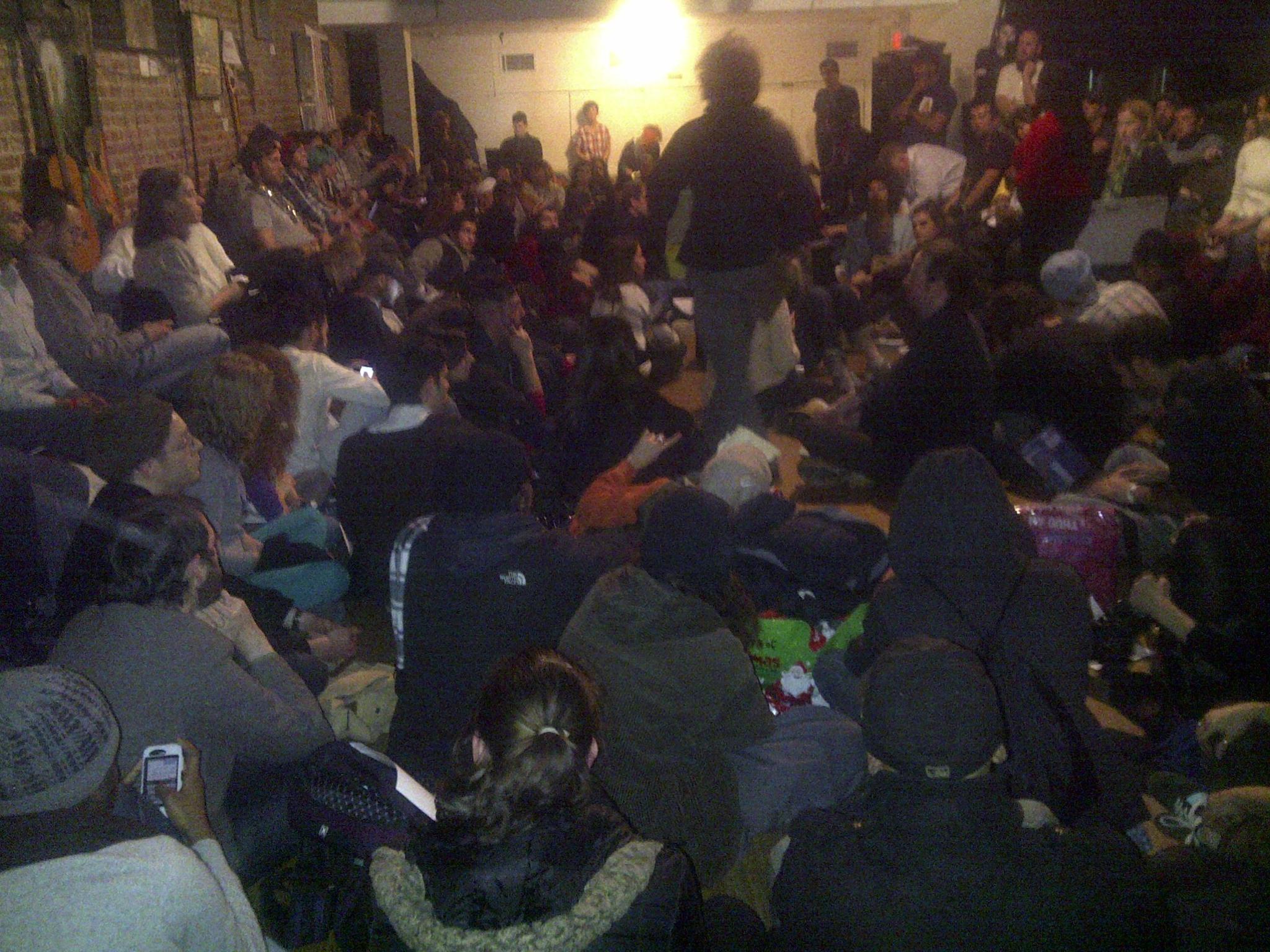
To create the container for these conversations, we followed a spokes council model. A spokes council is a tried and true structure used by organizations and political movements with strong commitments to radically democratic forms of coordination and decision-making. It was originally devised through experiments with alternative, more direct, participatory forms of democracy in Porto Alegre, Argentina, Chiapas, and Seattle. Grassroots activists then popularized the model during the Anti-Globalization movement of the 1990s and early 2000s. Disillusioned by the dominant forms of political participation enabling global economic institutions like the IMF and WTO to concentrate wealth and power among multinational corporations, activists adopted the model in their search for meaningful alternatives.1
The model is meant to resemble spokes on a wheel, with multiple individual spokes converging at a central hub where participants can exchange information and strategize together. Each spoke on the council is a representative from a different group or cluster of groups. In our case, spokes were representatives from crews of grassroots activists engaged in local struggles against data center developments in their areas.

What distinguishes a spokes council from, say, a typical coalition or the consensus models of the 1960s and 70s, is how it foregrounds the autonomy of all spokes involved. Joint plans for coordinated action can emerge from the council, but groups decide for themselves what degree to participate in any plans or projects that come out of it. The point is not to unilaterally make decisions for a movement, but rather to facilitate productive dialogue and rapid, effective coordinated action in response to quickly shifting conditions.2
In practice, any spokes council will look a little different depending on the needs of the body being convened. In many spokes councils, representatives are regularly rotated so that no single person is made to be the voice of their cluster for too long. In our case, we instead asked groups to keep sending the same representatives to meetings if possible. We did this because our priorities were to foster a sense of familiarity and trust among attendees and to generate ongoing dialogue that retained a sense of continuity over time. Our goal wasn’t necessarily to coordinate mass actions, but rather to build strong cross-regional relationships between data center organizers and develop an analysis of our broader movement together through regular discussions that built on themselves over time.
The simplicity of the spokes council model makes it easily scalable—another reason it has been so effective for mass protest movements like Occupy Wall Street. And because tools for secure digital communication are so widely available today, people can convene in large numbers across vast distances via group video calls on platforms like Signal. If you’re an anti-data center organizer and you want to start being in regular, coordinated conversation with other struggles, you could start forming your own spokes council tomorrow. In fact, we think you should!
Put out a call to people you trust, set a time to meet, bring a good vibe that keeps people returning. If you listen to each other, ask good questions, take notes, review those notes regularly, with time you’ll start learning how to think and move together. It’s not that complicated. The hardest part is finding the right people to invite; in other words, building out a network of people you want to work with that reaches beyond your local community. We began by reaching out to people we knew and trusted who were also following the data center boom or being impacted by it. We pitched the idea to people, got input and buy-in, then circulated an invitation to participate and had others share it, too. In some instances, we put extra effort into securing spokes council representation from certain geographical areas we thought were unique or important sites within the broader anti-data center movement based on our analysis of what was happening on the ground there. Once our spokes council meetings began, we focused on identifying important areas of overlap between our struggles: common questions or themes people kept returning to and shared limitations they were coming up against.
We made sure to meet regularly, for multiple reasons. First, so organizers and facilitators could build rapport with each other over time. Second, with how rapidly data center fights are playing out, and how quickly national and global conversations about data centers are evolving within our chaotic media landscape (even faster than a 24-hour news cycle nowadays, we’d argue), we figured for the talks to be generative, they had to build on themselves over time in response to these changing conditions. This way, participants could start to recognize patterns and emerging themes from our collective discussions.
Early sessions were spent making introductions between the local organizers and giving representatives of each region an opportunity to share the history of their fights and any other important context. The idea was to get everyone on the same page to lay ground for deeper conversations. Next, we facilitated a series of “strategy deep dives.” Each of these hour-long discussions were dedicated to a specific region. Organizers were asked to give lengthier presentations of their local fights. Some also shared what they knew about other nearby data center fights and how they were (or were not) connected to them. Then, there was time for back-and-forth cross-regional discussion. The deep dives were guided by the following prompt:
We want to spotlight specific strategies that folks have taken up in their local struggles. We invite each region to share a particular strategy with the group which they consider to be successful and/or critical in their organizing work, reflecting on the questions below. Regions should feel encouraged to go as deep as they desire and can share for 10–20 minutes. After each strategy share, we invite all spokes council members to ask additional questions, with the hopes that this conversation can support others in thinking through their local strategizing. We expect to highlight one struggle during this meeting and will continue with this format until all regional struggles have had the opportunity to share.
Tell us about a strategy which has been successful in your organizing struggle so far. Why did this work?
What sort of infrastructure did you leverage (networks, communication channels, community, resources, etc.) and what infrastructure did you need to develop for this to be successful?
How did you go about this work?
What were the outcomes, expected and unexpected?
How has this shifted your work since?
These conversations have taught us a great deal about each local movement involved. They’ve also helped us all envision the anti-data center struggle as a broader, collective movement rather than a set of fragmented, individual place-based fights. We think it is important to do this for three reasons:
1. Data centers are wildly unpopular among the general public, and this opposition cuts across diverse political lines;
2. New data center development projects are rapidly encroaching on a very broad geography—they’re coming to every region, whether urban, rural, north, south, east, or west, and whether or not the region has the resources or bureaucratic channels in place to meaningfully resist;
3. The current state of the US federal government renders it unable to intervene in the data center fight on a national scale, except on the side of data center developers, AI companies, hyper-scalers, and other tech elites. Because the federal government cannot set the terms for a widespread, unified resistance to data centers, it is critical for local anti-data center organizers to do so themselves, together.
We now present some reflections from our time mediating and synthesizing the spokes council discussions. To retain some of the original flavor of how we arrived at the reflections—through ongoing dialogue between anti-data center organizers, sparked by narrated report-backs from their experiences on-the-ground—we try to interweave our takeaways with stories that were shared with us during our time together.

Nonprofits aren’t the backbone of this movement, you are. They have important resources and knowledge to contribute, but when we reify them as the authorities of our fights, or depend on the handful of networks they build to be the only sources of connection between our local struggles, we sacrifice diversity, dynamism, and resilience in our movement ecosystems.

The speed and scope of the data center build-out poses unique challenges to our organizing efforts, especially given the immense wealth tech elites are pouring into driving the expansion. Developers are hungry to buy up land and fast-track construction projects so they can turn a profit from the boom as soon as possible. And secrecy around these land purchases can sometimes mean a project is in the works for months by the time community members find out about it. Instead of spending limited time, energy, and resources fighting for things like robust regulatory measures or building autonomous community-oriented tech infrastructures to take power back from their Silicon overlords, organizers are often forced to respond to already encroaching threats. This places them on their back foot from the beginning of the fight. In our conversations, many organizers expressed a desire to shift from a reactive to a proactive position within their struggles. They wanted to start organizing on their own terms, setting their own timelines and agendas instead of being dragged along by a developer’s. To tip the scales in such unequally resourced battles, we need to get creative about our strategies and tactics, and stay constantly attuned to the contours of our fights at every stage.
A lot of the tactics people shared in our discussions revolved around organizers buying time for themselves by leveraging existing regulatory channels to slow down development timelines. But in one community, organizers reported growing tired and frustrated sinking valuable time into pointing out violation after violation when political processes were fudged or ignored. With municipal government officials frustratingly deep in the pockets of developers, they sensed it was time to switch things up.
As local fights progress, their dynamics can change significantly. To turn the tides in their favor, organizers have to continuously re-assess the landscape of their fight with an eye for which tactics are working and which are siphoning more resources than they’re worth; when certain paths for resistance are becoming closed off to them and when opportunities to test out new strategic or tactical approaches arise. For instance, one could imagine a situation where grassroots support for a local fight swells and new energy gets drawn into city council meetings at a moment when longer-term organizers are eager to try something new. Perhaps this swell opens space for a multi-pronged approach to emerge, like what one organizer called a “multiple pinch-point strategy.” A new and enthused base of support may do well showing out for city council meetings, holding this ground for the fight, learning from exposure to their local government’s political theatre, and getting acquainted with the ongoing movement through relationship building. Meanwhile, other organizers might redirect their focus to planning and executing a series of home demos on useful pressure targets. Or, they may decide to take on a whole new pressure campaign involving a different municipal body, such as a local water board. One representative on the spokes council shared that upon realizing in June 2026 that a number of contracts with their Special Utility District (SUD) were set to expire in August, they switched gears and made the SUD a priority target.
Facilitating in-depth strategy report-backs in the spokes council was itself one way we tried to shift positions within our fights from from reactive to proactive. We thought learning about the strategies and tactics different organizers were using might expand our own repertoires and spark new ideas we could take back to our communities.
Reflection #1
Organizers in Ypsilanti, Michigan stressed in our discussions that many people who come to mobilizations in their area do not show up very "protagonized." By this, they mean people who might not typically consider themselves "strategy people" or have much prior experience in community organizing before joining the anti-data center fight. This is by intention. For Ypsilanti organizers, it is important to bring people into this work on equal footing, inviting the whole community to decide what the fight is about and bring ideas about how it can be addressed. When a collaboration was announced between the University of Michigan and Los Alamos National Laboratory to construct a research compting data center in their town, concerned residents took the initiative to raise concerns about the proposal with their Township Board of Trustees. Organizers spread the word about their plans to attend a board meeting to toppose he project. Then, they invited every prospective attendee to share a big meal beforehand and celebrate together afterwards. This approach has fostered a widespread sense of ownership and personal investment in the campaign, strengthened by the relationship building taking place within and beyond formal "organizing."
Rather than slotting people into specific roles or action opportunities, Ypsilanti organizers invite folks to join an array of working groups which have emerged from the interests of all those involved. Some of the first working groups to emerge included 'songs against data centers', flyering, and a poetry working group. While poetry and singing may not necessarily be the foundational working groups seasoned organizers would think to start in the early days of a movement, the poetry group in particular quickly proved itself central to the campaign.
Their work was so affective it made one town official cry, marking the first time a board member decided to oppose the data center. Last fall, Ypsilanti organizers held a rally and a week of action, where folks held noise demos outside the homes of board members who still supported the data center. Soon after, every pro-data center Board member flipped their position to stand 100% against the project. Many board members have since been quoted expressing their gratitude to local residents for educating them about an issue they admit to being ignorant about.
By April of 2026, The Ypsilanti Township Board of Trustees had unanimously adopted a resolution formally opposing the data center facility anywhere within the township.3 Board supervisor Brenda Stumbo went so far as to say "we will fight to our very last breath" to stop the data center from being developed." She committed to stand by and fight the proposed data center alongside the community. While the University of Michigan is exempt from following local zoning laws, the Township has been finding creative ways to slow and block the data center using the powers at their disposal. Recently, they instituted a 365-day moratorium on supplying water to data centers.4
A Gallup poll recently found that 7/10 Americans would oppose an AI data center being built near them. The poll found that more Americans would prefer to live near a nuclear power plant than a data center.5 These numbers grant legitimacy to what anyone with a news feed and a penchant for public participation in municipal politics will have already intuited: data center development projects are deeply unpopular, and resistance to them is acute and widespread. What this poll fails to point out, however, is that most people will be living close to both a data center and a nuclear power plant if our adversaries get their way. Warnings about the unprecedented spike in energy consumption posed by the looming data center buildout have been met with calls from corporate executives and politicians for public and private investment in new nuclear energy facilities across the US Indeed, for many anti-nuclear and anti-extraction activists, the struggle against the data center buildout is a struggle against the nuclear energy and uranium mining industries.
As it turns out, the anti-data center movement sits at the junction of many struggles often imagined as separate from one another: struggles for environmental justice, community autonomy, land defense; against war and surveillance; class struggles animated by the increasing precarity of labor and fears of job loss from automation. The data center buildout is an incredibly multifaceted issue. Consequently, it mobilizes people to action for a number of intersecting reasons.
Viewed through one lens, the data center buildout is an environmental justice issue, threatening municipal water supplies in already drought-stricken regions, increasing demand for fracking and mining operations, and threatening to level biodiverse lands as new facilities are constructed. This at once draws attention at a national scale from prominent environmental justice organizations like Sierra Club, as well as attention to local anti-data center site fights.
Reflection #2
In Duluth, Minnesota, organizers are trying to shut down plans for a proposed Google data center campus in one of the city’s suburbs. In our conversations, they reflected on how the history of environmental activism in their area shapes their fight, noting “in this region we have a strong tradition of environmental protection and environmentalism. Organizations that work on that fight are very supportive, like Sierra Club, MCEA, CURE.” The organizers also drew connections between their data center fight and a mining struggle against heavy metal mining next to the Boundary Waters territory of Northern Minnesota.
The tendency in Duluth to view the data center fight through an environmental justice lens benefits the movement in a lot of ways. There are strong organizing muscles already in place to wage environmental struggle, a deeply rooted culture of environmental stewardship that quickly activates community members, local institutions well-equipped for a fight of this kind. But at times, organizers found the strong environmental justice frame to be limiting.
A local group that calls itself Northwoods Against Surveillance sees the threat posed by the Google data center as an issue of expanding mass corporate surveillance. “It’s been really hard to have this orientation, and tough to foreground this issue in the data center struggle. No one else is talking about this,” one organizer shared. “Public narrative around this has focused on protecting the wetlands in this location. We’ve had a difficult time crafting narratives around the project related to surveillance.”
This challenge is emblematic of a more general hurdle multiple regions cited in their organizing work. According to one spokes council member, the most pressing challenge their movement has to navigate is the sheer volume of injustices that need addressing, and the lack of coordinated action between overlapping struggles. This remark came at a time when ICE was expanding operations in their community. One person shared, “it feels like there's too much going on for people to pick a struggle and go with that. What route makes it possible to resist any of it at all?” Organizers across regions expressed a desire to find lines of synergy between different struggles, both for the sake of providing further support to each and in order to prevent feelings of burnout, overwhelm, and hopelessness.
Northwoods Against Surveillance has developed creative tactics for bringing their anti-surveillance and anti-data center efforts into closer alignment. They’ve noticed a broad negative sentiment towards Flock building in the region, which they report has been good for connecting the dots and helping people see connections.
After realizing there were Flock cameras up at the proposed data center site, they launched a social media campaign to make this known to the public. They also distribute flyers and literature at anti-data center events hosted by organizations they’ve built collaborative relationships with, spreading awareness on Flock cameras, the dangers of mass surveillance, and circulating guides for “De-Googling Your Life.” This is part of their larger information campaign against Big Tech more broadly, a major goal of which is to illuminate the ways Google is trying to capture and control this community.
With the right conditions and some clever organizing, the multiplicity of the data center struggle can be a tremendous advantage for our movements. In Ypsilanti, it has amplified local resistance to the data center fight, drawing support in greater numbers and contributing to a diverse, resilient patchwork of a movement. As one representative recounted, “there's been a big shift in the campaign. At the beginning, it was mostly focused on environmental impact. Mostly because they were canvasing the local area and that's what most people locally impacted cared about. But as the movement recruited more students and traditional political activists, the anti-war angle has begun to be a louder part of the campaign. That shift brought in a lot of interest, especially inter-generationally. Locals will always care about a data center being in their backyard, but widening the scope of issues is helpful for getting others to join.”
Aside from generating increased support for their fight, organizers presented a case in which embracing the multiplicity of the data center struggle spurred productive dialogue on two key issues it encompasses: “The University of Michigan grad student union has gotten recognition within the last couple of years. This is where the academic legitimacy of the local movement is coming from. They hosted a conference on labor and AI. The conference was a chance to engage in the larger discourse and point people to the data center nearby.”
Conclusion
The vast majority of grassroots anti-data center campaigns today are playing out at the local level, but the data center boom itself is playing out across thousands of sites at once. And its looming consequences will extend beyond the territory of any one place. For this reason, it is important organizers find ways to connect, talk, organize and think together.
While a number of well-resourced, institutionalized nonprofit networks have already started holding cross-regional convenings around the data center struggle, you don’t need to rely on them to begin this work. Nonprofits aren’t the backbone of this movement, you are. They have important resources and knowledge to contribute, but when we reify them as the authorities of our fights, or depend on the handful of networks they build to be the only sources of connection between our local struggles, we sacrifice diversity, dynamism, and resilience in our movement ecosystems.
Although all regions represented currently in our spokes council are located within the borders of the US, we also stress the importance of connecting with locales across the world. Just as the data center boom is a globe-spanning issue, the movement resisting it is also global. We can already observe a budding internationalism in some of our local fights. Spokes council representatives reported people traveling from as far as South Korea to interview them about the organizing efforts underway in their communities.
When we think and move together as we wage our local fights, we build up our collective capacities to resist the data center buildout and undermine Big Tech’s power over us. In this article, we’ve reflected on our efforts to do this and offer the spokes council as one model for organizing on your own terms. Try it out, and let us know how it goes.