Six Data Center Myths
Editors
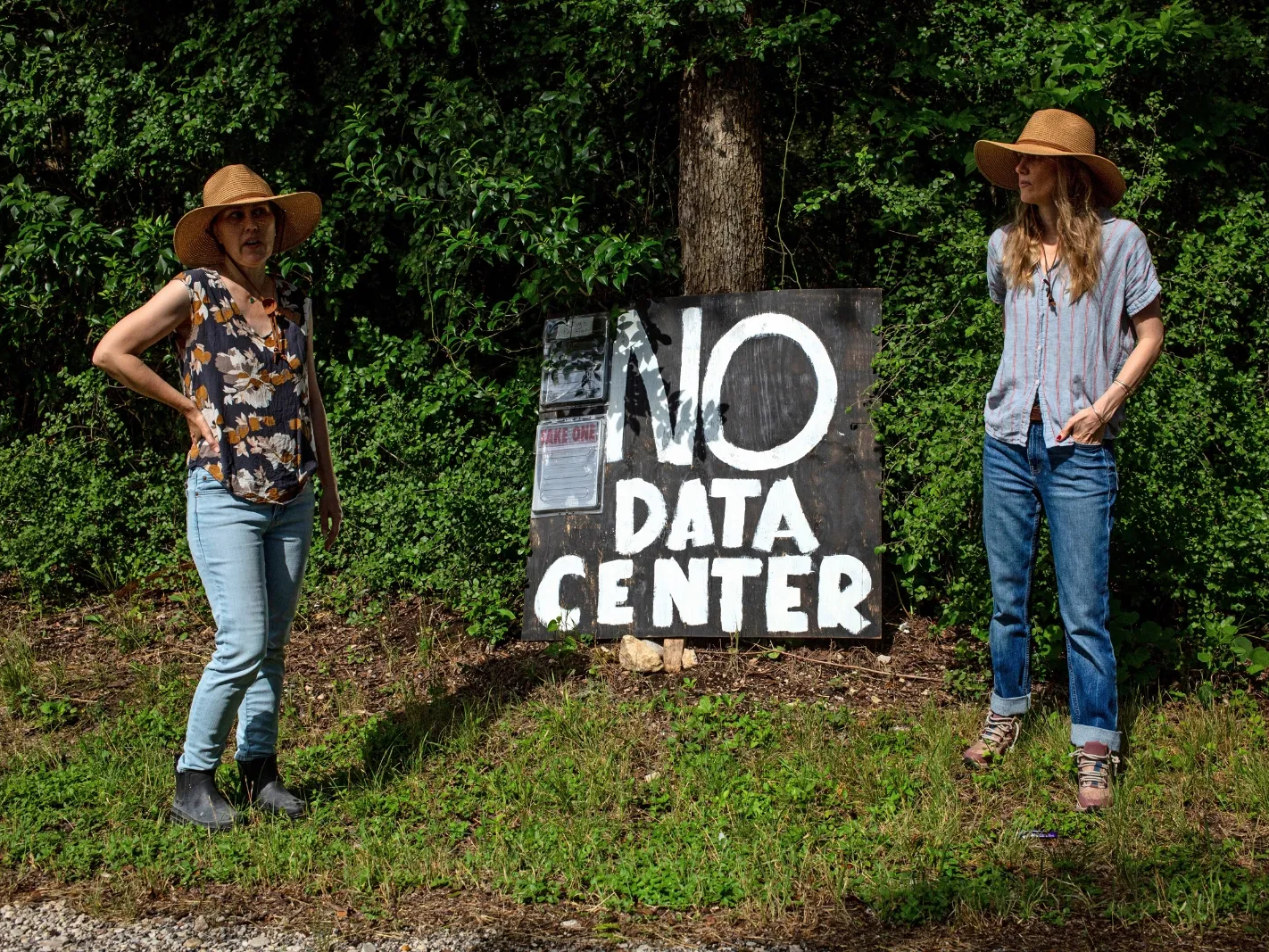
1.Data centers are for your phones, your hospitals, your schools, and your daily life. They have to be built somewhere.
Developers here keep taking politicians on tours of 90’s style tiny data centers, when they're planning to build something completely different. The data center boom is not for the 'cloud,' or hospital data storage, or iPhone photos, or even running normal ChatGPT—it's for training and operating next-generation AI models.
2. Don't worry, our data center will use closed-loop cooling.
Closed-loop cooling keeps getting pitched as a cutting-edge technology, but it is the industry standard now. As for the waterless cooling and waterless methane fuel cells we’re starting to hear about, we'll believe it when we see it, and wonder how they're fracking gas without water.
We've learned to not trust anything these developers say. And there’s always something they’re ignoring. The problem with closed-loop cooling is that it uses less water, but more power, which requires water. Because power plants use so much water, grid-connected data centers in Texas ultimately consume 206 gallons per megawatt hour. So a 1 GW project uses 5 million gallons a day from electricity alone. And that's about the same for onsite gas plants.
Closed-loop cooling also means they're filling and flushing, and won't tell anyone what they're putting in the water before dumping it back in our waterways.
3. Data centers make the energy grid more robust, and reduce the cost of electricity.
Electrical grids can't support demand from data centers, so new infrastructure is being built, paid for by ratepayers. And developers pitch the backup power generation as a benefit, but the number of diesel generators they’re planning to run and test regularly seems apocalyptic.
4. Data centers are better for the environment than another huge housing development.
Would you rather live by a data center or be eaten by a shark? This kind of trick distracts from the actual proposal on the table. And the argument that housing developments use more water than data centers ignores the water used for power generation, not to mention the other harms.
5. Data centers will produce lots of jobs.
This is only true for a few years during construction. After that, the data centers we’ve heard of offer only a handful of jobs, mostly to janitors and security guards.
Some unions here have come out in support of data centers, trying to pit workers from the region against local affected residents. We don't think that short-term jobs are worth the long-term impacts of data center development.
6. All of your concerns are outdated. AI technology is moving so fast that it will solve all of these problems, and also every other problem too.
This wacky storytelling about the future distracts from what is happening right now—which is not a magic super-AI solving every problem, but developers lying to trick communities into letting them build data centers.
The main issue here can't be solved by AI anyway, because it isn't about data centers. It's about communities' rights to have a say about land development, technology, and their future.